
Description
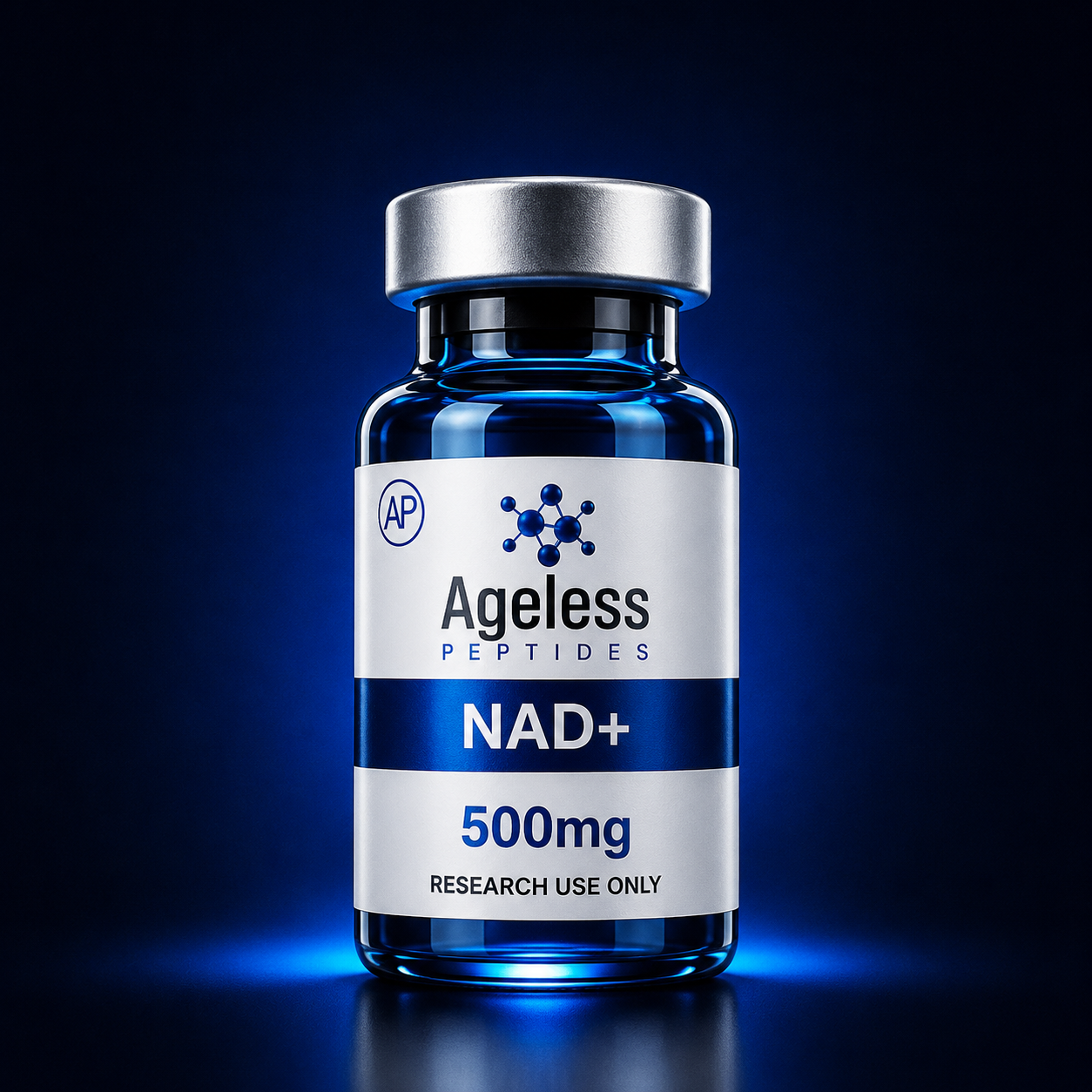
NAD+ (nicotinamide adenine dinucleotide) is a coenzyme found in every living cell and one of the most active topics in aging biology. Each vial contains 500mg of lyophilized NAD+ for laboratory research.
What Is NAD+?
NAD+ has two major roles. It shuttles electrons in the redox reactions of glycolysis, the citric acid cycle, and mitochondrial respiration, and it is consumed as a substrate by enzyme families including sirtuins, PARPs (involved in DNA repair), and CD38.
Animal and tissue studies have reported that NAD+ levels decline with age, which has made NAD+ and its precursors a focal point in longevity research. Laboratories study how restoring NAD+ availability affects mitochondrial function, sirtuin activity, and DNA-repair capacity in cell and animal models.
Areas of Research Interest
- Mitochondrial respiration and cellular energy metabolism
- Sirtuin (SIRT1–SIRT7) activity studies
- PARP-mediated DNA repair research
- CD38 and age-related NAD+ decline
- Comparative studies with precursors such as NMN and NR
Product Specifications
- Compound: NAD+ (nicotinamide adenine dinucleotide)
- Contents: 500mg per vial
- Form: Lyophilized powder
- Intended use: Laboratory research only
Handling & Storage
Supplied as a lyophilized (freeze-dried) powder in a sealed vial. Store according to the label, protected from heat, light and moisture.
Frequently Asked Questions
Why supply NAD+ rather than a precursor?
Precursors such as NR and NMN require cellular conversion, which introduces a variable. Supplying NAD+ directly suits research examining the coenzyme itself rather than salvage pathway conversion.
What makes NAD+ handling different from the peptides?
NAD+ is hygroscopic and readily absorbs atmospheric moisture, so the vial stays sealed until use. It is also less stable in neutral to alkaline solution than in slightly acidic conditions, which matters when selecting a reconstitution buffer.
Is NAD+ a peptide?
No. NAD+ is a dinucleotide coenzyme, not a peptide. It is included in our catalog because it is widely researched alongside peptides in cellular-aging protocols.
How does NAD+ relate to 5-Amino-1MQ?
5-Amino-1MQ inhibits NNMT, an enzyme that consumes nicotinamide, a key NAD+ building block. The two are often studied together in metabolism research.
Is NAD+ 500mg Vial intended for human use?
No. This product is sold strictly for in vitro and laboratory research by qualified professionals. It is not for human or veterinary use.
Related Research Compounds
Sold for research purposes only. Not intended for human consumption. These statements have not been evaluated by the FDA. This product is not a drug, food, or cosmetic and is not intended to diagnose, treat, cure, or prevent any disease.

Reviews
There are no reviews yet.