
Description
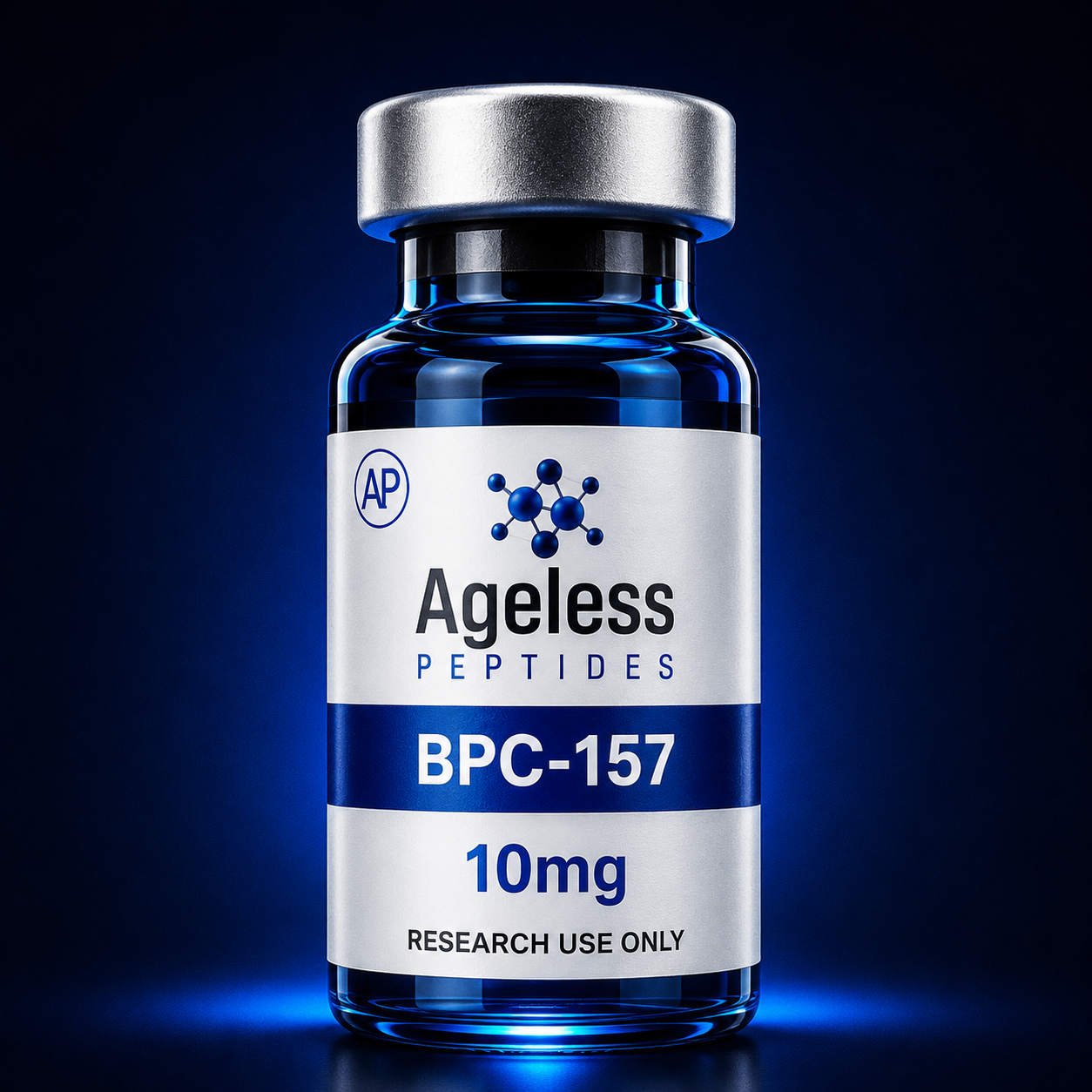
BPC-157 is one of the most frequently cited peptides in preclinical research. Each vial contains 10mg of lyophilized BPC-157 for in vitro and animal-model laboratory work.
What Is BPC-157?
BPC-157 is a synthetic pentadecapeptide (15 amino acids) whose sequence is derived from a larger protein, often called body protection compound, first isolated from gastric juice. Unlike many peptides, it has been reported to be relatively stable in gastric conditions, which is one reason it appears so often in gastrointestinal research.
Most published BPC-157 data comes from rodent and cell-culture models. Researchers have looked at its interaction with the nitric oxide system, growth-factor signaling, and angiogenesis (new blood-vessel formation) as possible explanations for the outcomes seen in those models.
Areas of Research Interest
- Tendon, ligament, and skeletal-muscle healing in animal injury models
- Gastrointestinal mucosa and intestinal-lining models
- Angiogenesis and vascular growth-factor signaling
- Nitric oxide pathway interactions
- Comparative and combination studies alongside TB-500
Product Specifications
- Compound: BPC-157 (Body Protection Compound-157)
- Contents: 10mg per vial
- Form: Lyophilized powder
- Intended use: Laboratory research only
Handling & Storage
Supplied as a lyophilized (freeze-dried) powder in a sealed vial. Store according to the label, protected from heat, light and moisture.
Frequently Asked Questions
What does pentadecapeptide mean in this context?
It means the molecule is fifteen amino acids long. BPC-157 corresponds to a partial sequence of a protein found in gastric juice, and that short length is part of why it is stable enough to study across a range of conditions.
How is BPC-157 handled once reconstituted?
Reconstituted material is held at 2–8°C and protected from light. Repeated freeze-thaw cycles are avoided; where material will be used across several sessions, aliquoting immediately after reconstitution is the usual approach.
What is the difference between BPC-157 and TB-500?
BPC-157 is a 15-amino-acid fragment studied mostly in localized tissue and GI models. TB-500 is modeled on thymosin beta-4, an actin-binding protein studied for cell migration. Many labs research them side by side, which is why we also offer the BPC-157/TB-500 blend.
How is BPC-157 supplied?
As a lyophilized (freeze-dried) powder in a sealed 10mg vial.
Is BPC-157 10mg Vial intended for human use?
No. This product is sold strictly for in vitro and laboratory research by qualified professionals. It is not for human or veterinary use.
Related Research Compounds
Sold for research purposes only. Not intended for human consumption. These statements have not been evaluated by the FDA. This product is not a drug, food, or cosmetic and is not intended to diagnose, treat, cure, or prevent any disease.

Reviews
There are no reviews yet.