
Description
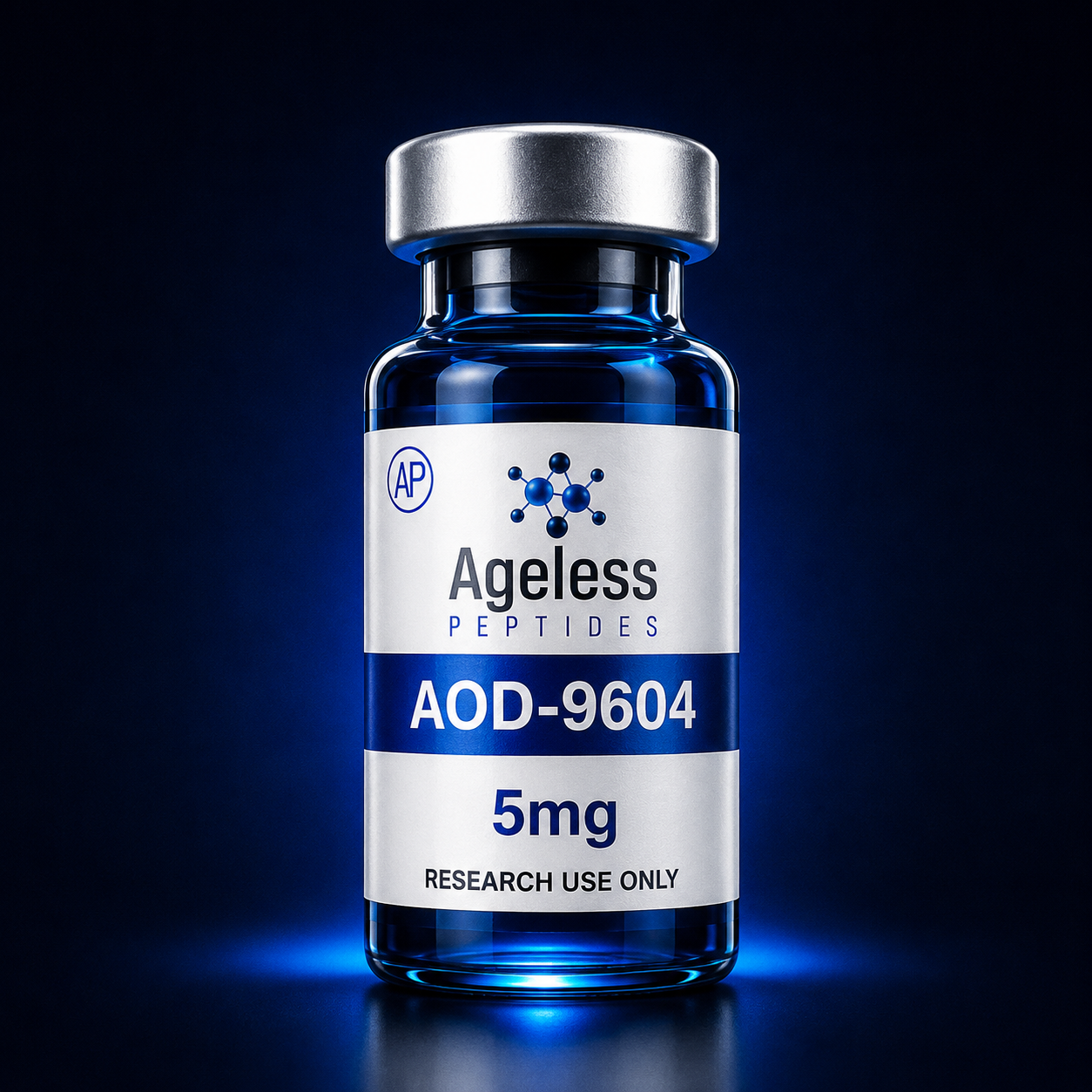
AOD-9604 is a synthetic peptide corresponding to the C-terminal 176–191 fragment of human growth hormone, with an added tyrosine residue at the N-terminus. Supplied as 5mg of lyophilized powder in a sealed vial.
The fragment is studied because it isolates one region of the growth hormone molecule from the rest. Full-length hGH acts through the growth hormone receptor and drives IGF-1 production; the 176–191 fragment does not show that receptor activity, so research using it can examine lipid metabolism endpoints without IGF-1 signaling as a confounding factor. That separation is the main reason the fragment appears in metabolic literature at all.
What Is AOD-9604?
Human growth hormone is a 191-amino-acid protein. AOD-9604 is modeled on its C-terminal region (amino acids 176–191) with an added tyrosine residue. It was developed to isolate the lipid-metabolism activity associated with that region from the rest of the hormone’s signaling.
Early rodent research examined AOD-9604’s relationship to lipolysis and lipogenesis signaling pathways. Published work has reported that, unlike full-length hGH, it does not produce the same effects on IGF-1 levels or glucose tolerance in those models. That distinction is why researchers use it as a comparison tool.
Areas of Research Interest
- Lipolysis and lipogenesis in adipocyte and rodent models
- Comparative hGH-fragment versus full-length hGH studies
- IGF-1–independent signaling research
- Beta-adrenergic receptor pathway interactions
- Cartilage and connective-tissue models
Product Specifications
- Compound: AOD-9604 (modified hGH fragment 176–191)
- Contents: 5mg per vial
- Form: Lyophilized powder
- Intended use: Laboratory research only
Handling & Storage
Supplied as a lyophilized (freeze-dried) powder in a sealed vial. Store according to the label, protected from heat, light and moisture.
Frequently Asked Questions
What does the 176–191 numbering refer to?
It identifies the position of the fragment within the 191-amino-acid human growth hormone sequence — residues 176 through 191, at the C-terminal end. Fragments are commonly named this way so that the parent sequence and the region involved are unambiguous.
Why is there an added tyrosine at the N-terminus?
The tyrosine residue was added to aid stability and to allow radiolabeling for tracking in early research. It is not present in the native hGH 176–191 sequence.
How is AOD-9604 different from full growth hormone?
It is only a 16-amino-acid section of the 191-amino-acid hGH molecule plus one added amino acid. Researchers study it specifically because it does not reproduce hGH’s full receptor activity in laboratory models.
What other compounds are used in lipid-metabolism research?
Common comparison compounds include 5-Amino-1MQ, Tesamorelin, and SLU-PP-332.
Is AOD-9604 5mg Vial intended for human use?
No. This product is sold strictly for in vitro and laboratory research by qualified professionals. It is not for human or veterinary use.
Related Research Compounds
Sold for research purposes only. Not intended for human consumption. These statements have not been evaluated by the FDA. This product is not a drug, food, or cosmetic and is not intended to diagnose, treat, cure, or prevent any disease.

Anonymous (verified owner) –